Alex Benson
Electrical Engineer
MSEE student at Colorado State building real-time hardware for aerospace and energy.
About Me
I'm an Electrical Engineering graduate student at Colorado State, working at the layer where firmware, analog hardware, and real-time control have to agree. I finished my B.S. in May 2026 (Aerospace concentration, Mathematics minor) and I'm pursuing an MSEE focused on embedded systems. I keep a Masters Portfolio of the courses I'm taking and what I'm learning in them. During the school year I'm a Graduate Teaching Assistant for ECE205 Analog Circuits, leading three lab sections and weekly office hours — a useful reminder that if you can't explain a loop or a bias point, you don't actually understand it.
At the Bureau of Reclamation I work on the next digital excitation system for hydropower plants across the West: QNX device drivers for NI PCIe DAQ hardware, Simulink exciter models on an SEL-3355 target, and the HMI operators will use in the plant. I was on-site this summer and stay on the project remotely through the school year. The interesting part is the unglamorous part — register maps, HIL racks, and a controller that has to be right when it ships.
Before that I interned at FIRST RF on a half-duplex phased array: multilayer RF boards in Altium, Zephyr SPI drivers, and S-parameter scripts so we weren't validating passives by hand. An earlier BOR tour put me on the same governor and exciter family — WECC/NERC testing, a field transducer I designed, and STM32/QNX firmware to bring plant signals into the controller. Woodward was my first look at aerospace DAQ and test, including a Python analysis tool that replaced a DIAdem workflow.
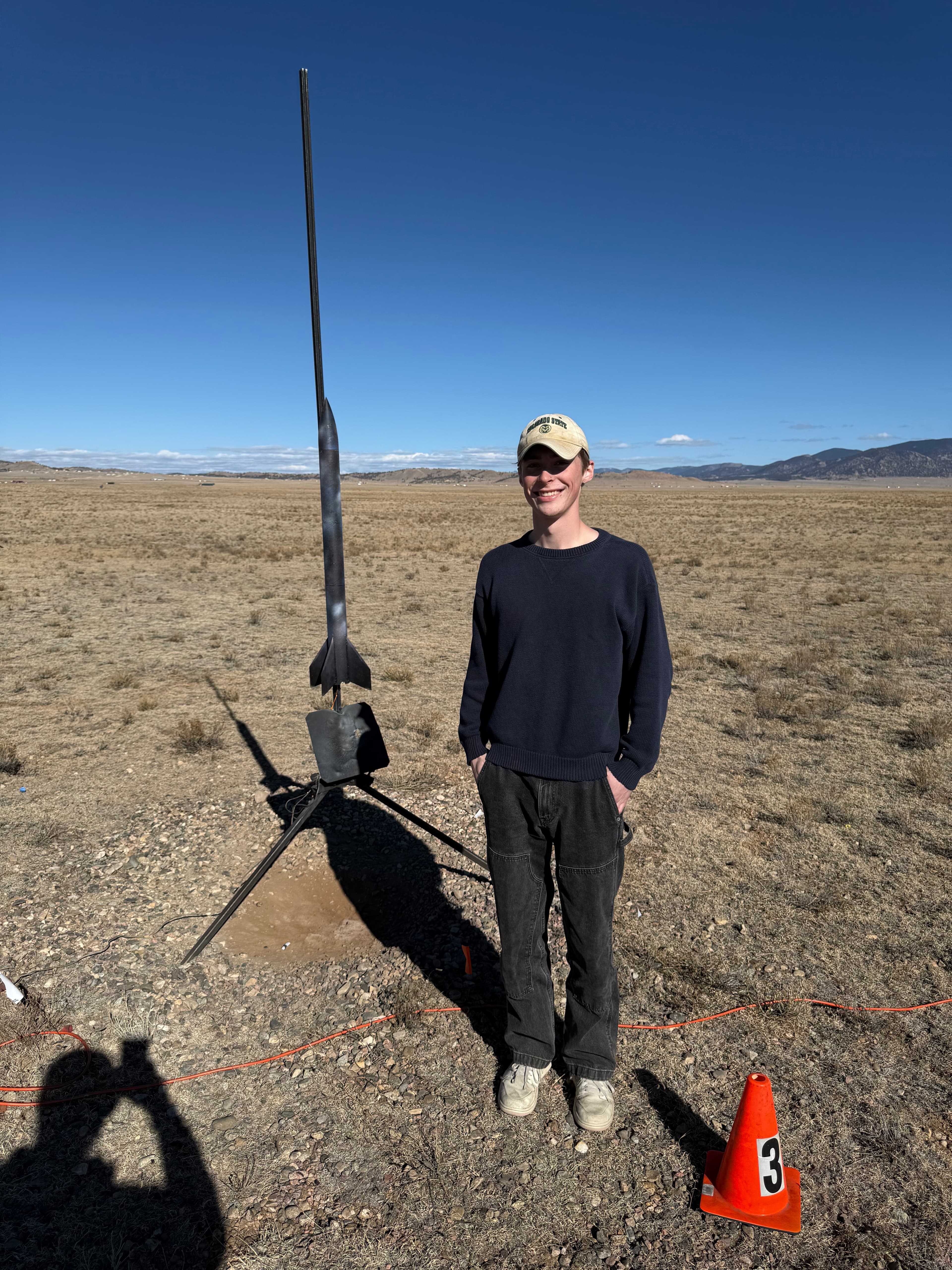
On campus I led the nine-person Payload Team for CSU's NASA USLI rocket and did SURE research in the ECSyD lab, automating photonic chip measurements so we weren't parked on a probe station all afternoon. I do my best work when I can put a scope on the problem, change the thing that's actually wrong, and keep going until the system behaves.