AI for Radar and Remote Sensing
ECE556 · Colorado State University
Spring 2026 | Fort Collins, CO · Accelerated MSEE credit
Why I took it
Dual-counted toward the accelerated MSEE during the BSEE. Aerospace concentration, plus RF work at FIRST RF — I wanted AI on the sensing side, not another generic deep-learning survey. This course puts models on radar and satellite data: precipitation detection, classification, estimation, and prediction.
What I learned
ML fundamentals and radar
Features, labels, capacity, hyperparameters, and train/validation/test — then modern radar and remote-sensing systems, how you read the observations, and where the applications actually live.
Classical and convolutional models
Decision trees and random forests, ANNs, SVMs, self-organizing maps, neuro-fuzzy methods and k-means, then CNNs, transfer learning, and U-Net — the stack used on precipitation and related products.
Sequence models and tools
RNNs, LSTMs, and GANs, with hands-on work in Scikit-learn, TensorFlow, and PyTorch, and a final project on an approved radar or remote-sensing problem.
Selected work
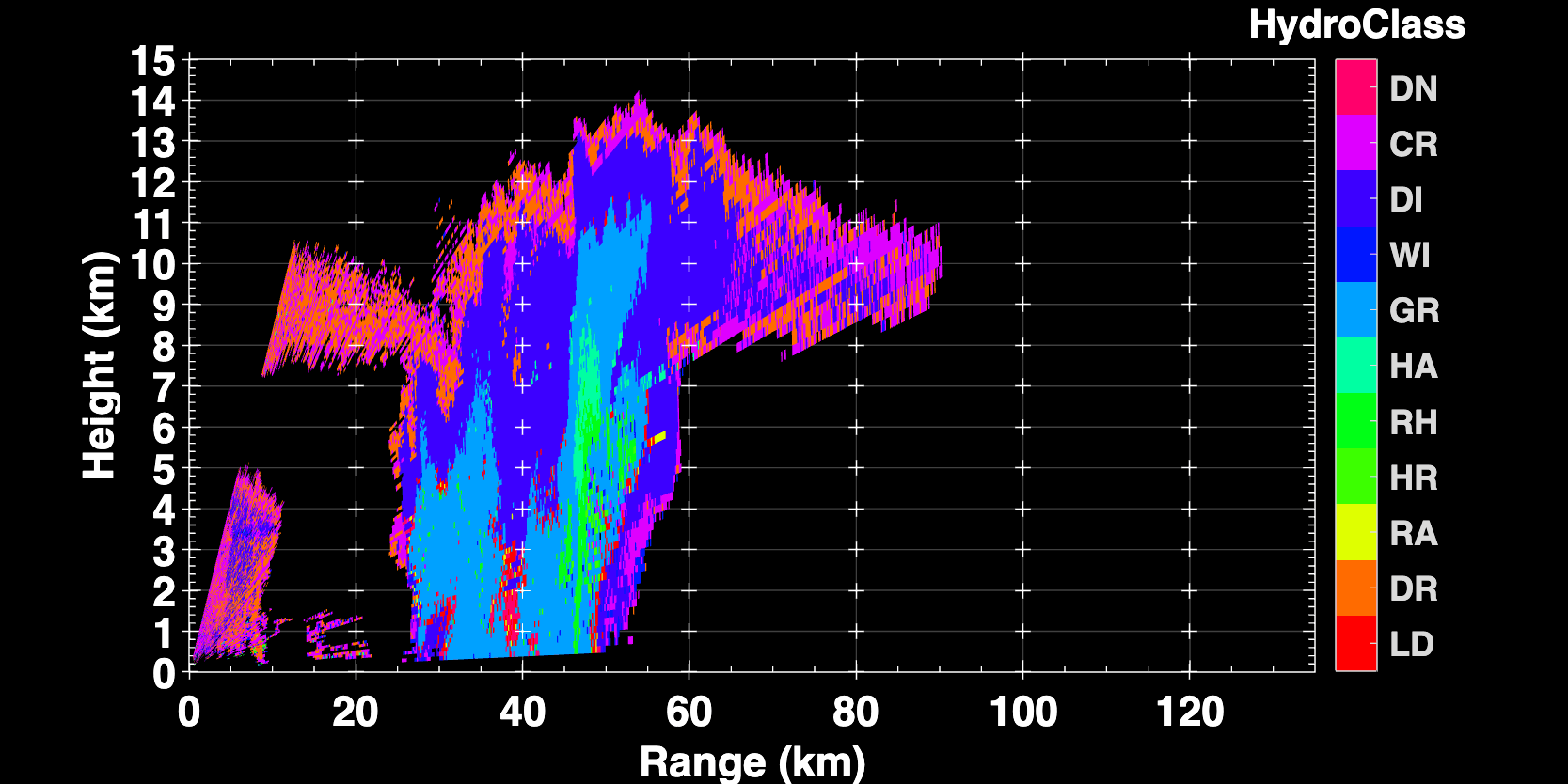
Fuzzy-logic hydrometeor classification RHI.
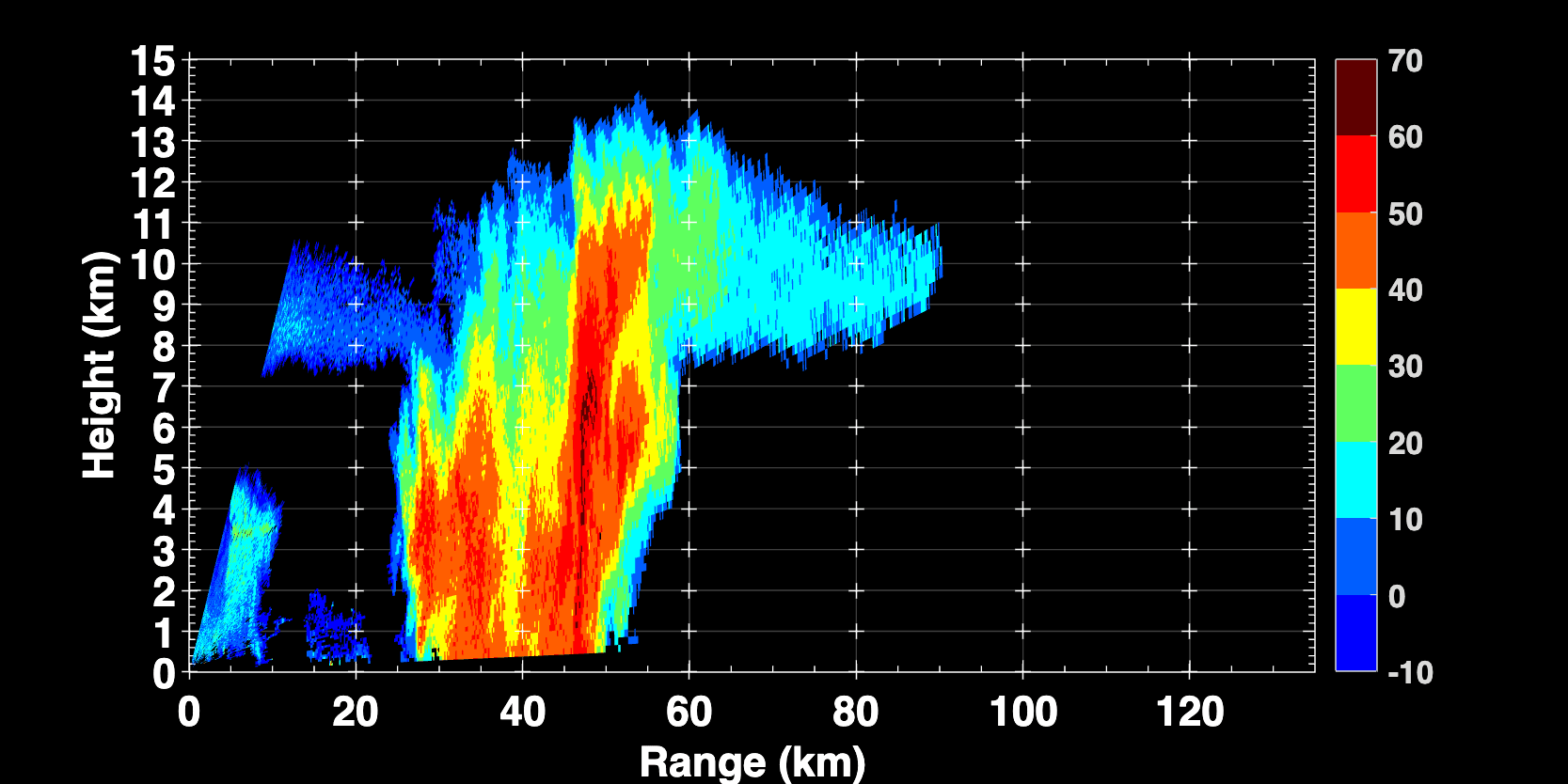
Reflectivity RHI through a convective core.
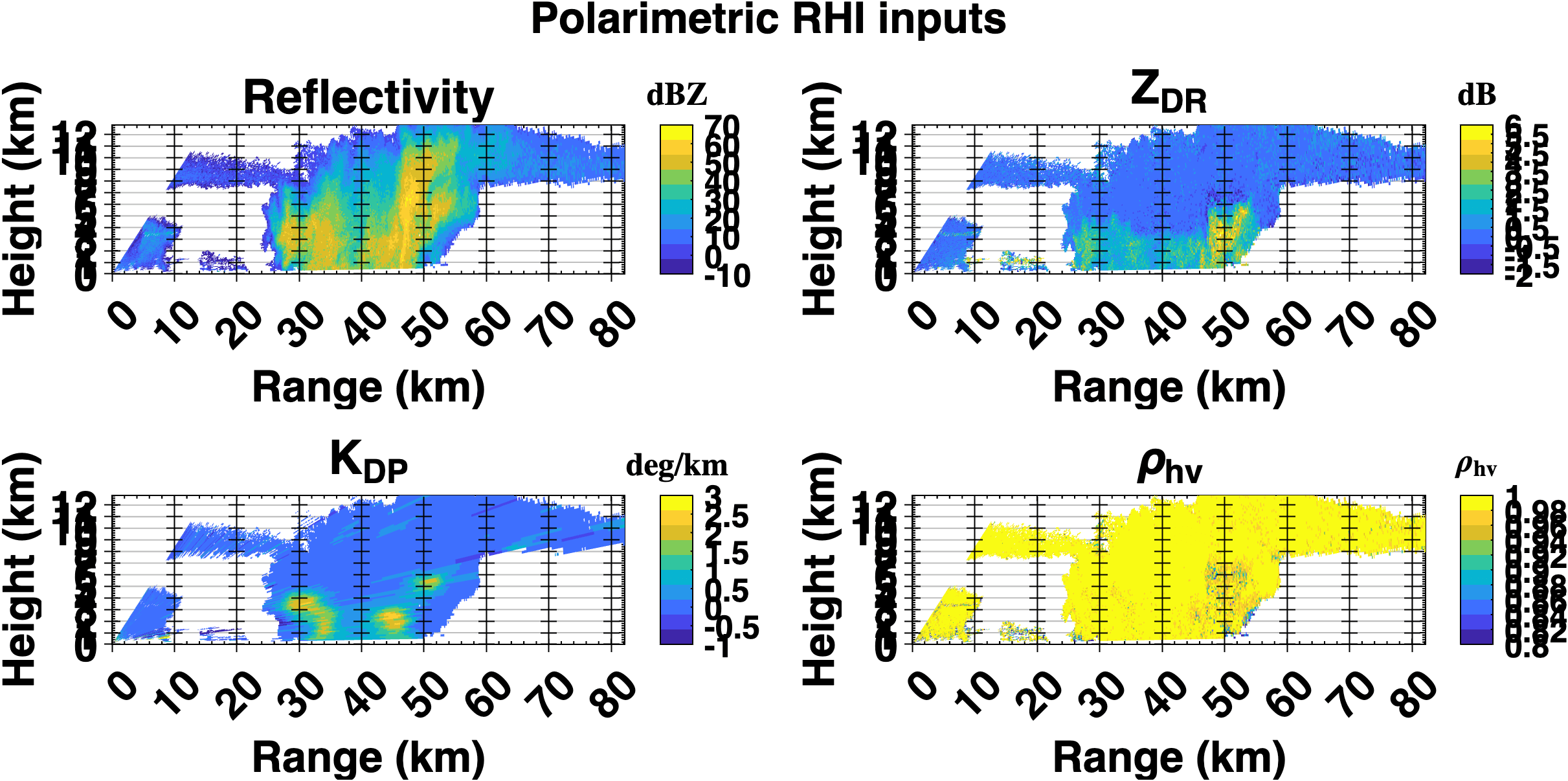
Polarimetric inputs: Z, ZDR, KDP, and ρhv.
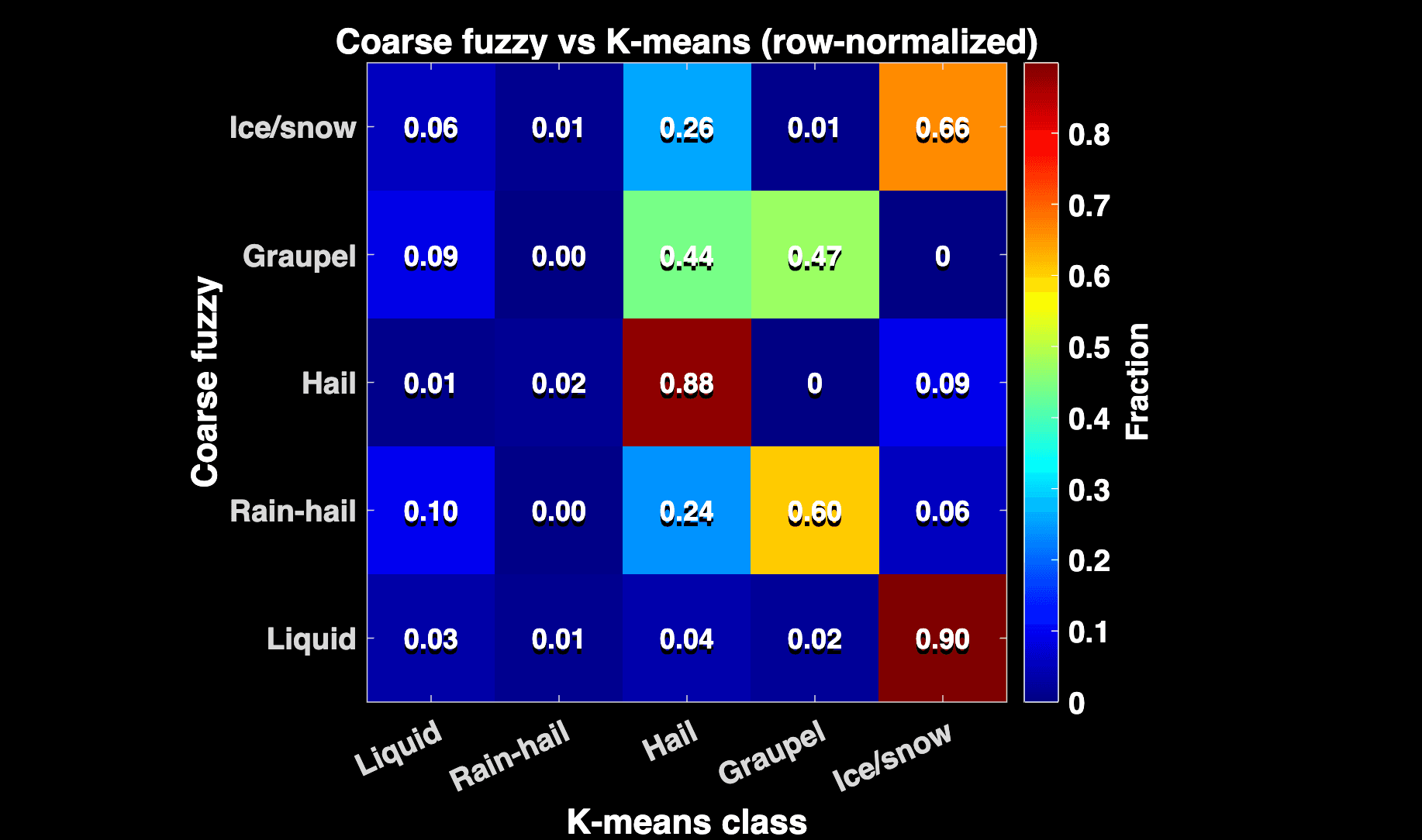
Fuzzy-logic hydroclass versus k-means, recall-normalized.