Aerospace Vehicles Trajectory and Performance
MECH519B · Colorado State University
Spring 2026 | Fort Collins, CO · Accelerated MSEE credit
Why I took it
Dual-counted toward the accelerated MSEE. Aerospace concentration and a year leading the USLI payload team — I wanted the other side of that stack: how a vehicle is sized, how an ascent is steered, and how you actually design a trajectory to an orbit, not just fly a payload on someone else's rocket.
What I learned
Orbital regimes
Orbital elements, Newton and Kepler, energy and angular momentum, then Hohmann and three-dimensional transfers — LEO, GTO, sun-sync, Molniya, GEO, and the start of interplanetary design.
Ascent and vehicle sizing
Staging, ideal velocity and mission losses, launch azimuth and sites, gravity-turn and linear-tangent steering, and the aero, gravity, and thrust-vector losses that eat the theoretical Δv.
Mission design tools
STK targeting and ascent simulation, an Excel analysis tool built over the semester for sizing and margin, and an introduction to NASA GMAT. The final project: design a rocket, pick a site, and fly two optimized missions.
Selected work
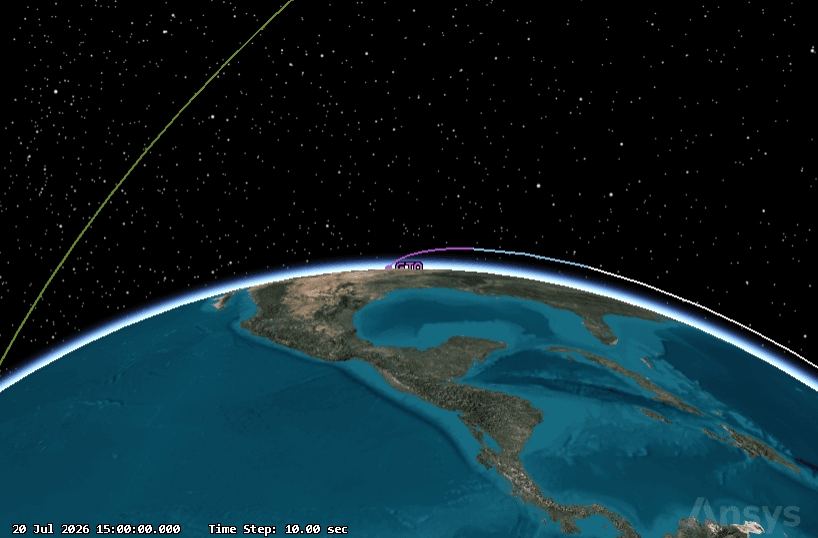
GTO ascent in STK.
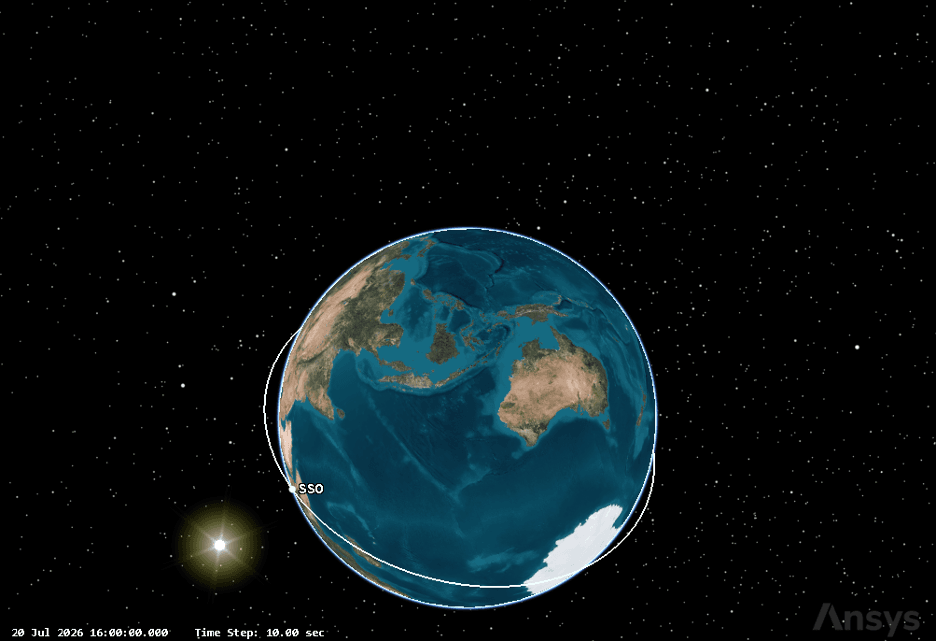
Sun-synchronous orbit in STK.
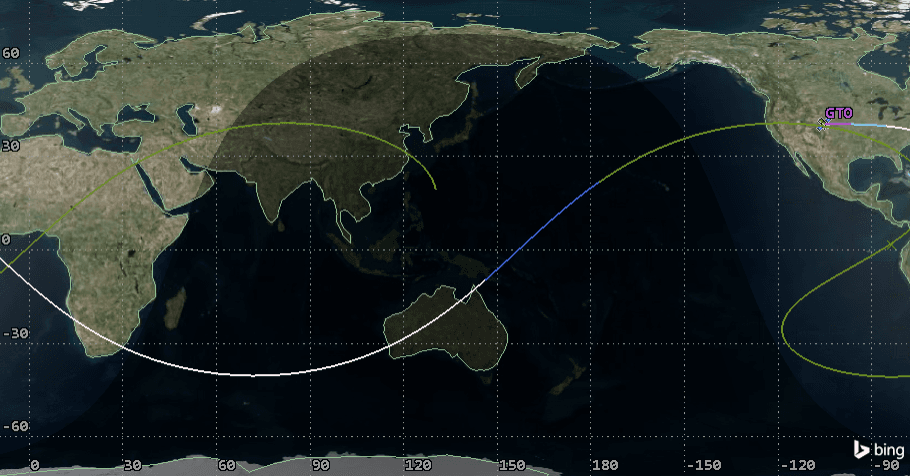
GTO ground track from Fort Collins.
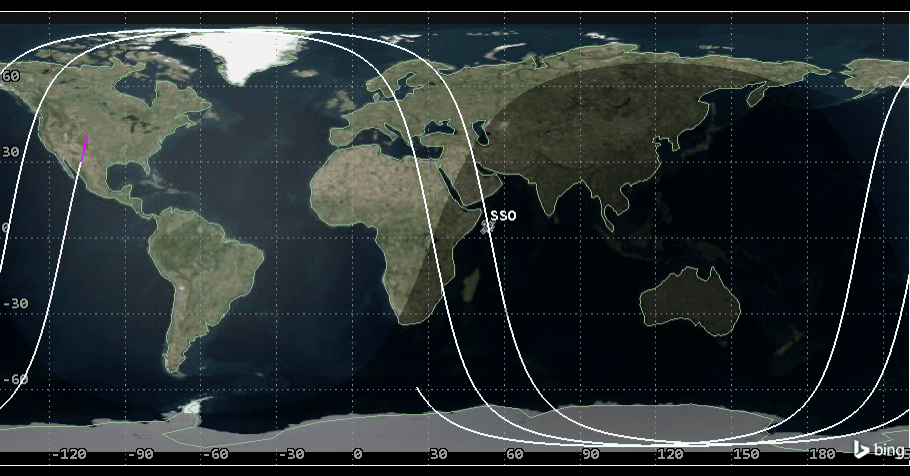
SSO ground track.