Adaptive Systems & Machine Learning
ECE553 · Colorado State University
Spring 2026 | Fort Collins, CO · Accelerated MSEE credit
Why I took it
Spring of senior year, dual-counted toward the accelerated MSEE. I already had signals and random variables (ECE312 / ECE303). I wanted the algorithms themselves — adaptive rules, discriminants, kernels — not just calling a library. This is the course that made later applied-AI work (radar, power systems) sit on something other than a black box.
What I learned
Adaptive learning rules
LMS, perceptron, and delta-rule updates, plus regularization — how a model actually moves when you show it an error, and what you pay for making it move too freely.
Pattern recognition and kernels
Statistical classification, supervised and unsupervised learning, layered machines, structural risk minimization, and kernel machines — including radial basis functions and probabilistic nets.
Deep models and projects
Back-propagation, CNNs, self-organization and associative memory, GANs, recurrent nets and transformers, with MATLAB and Python computer projects and a final system you design, implement, and measure.
Selected work
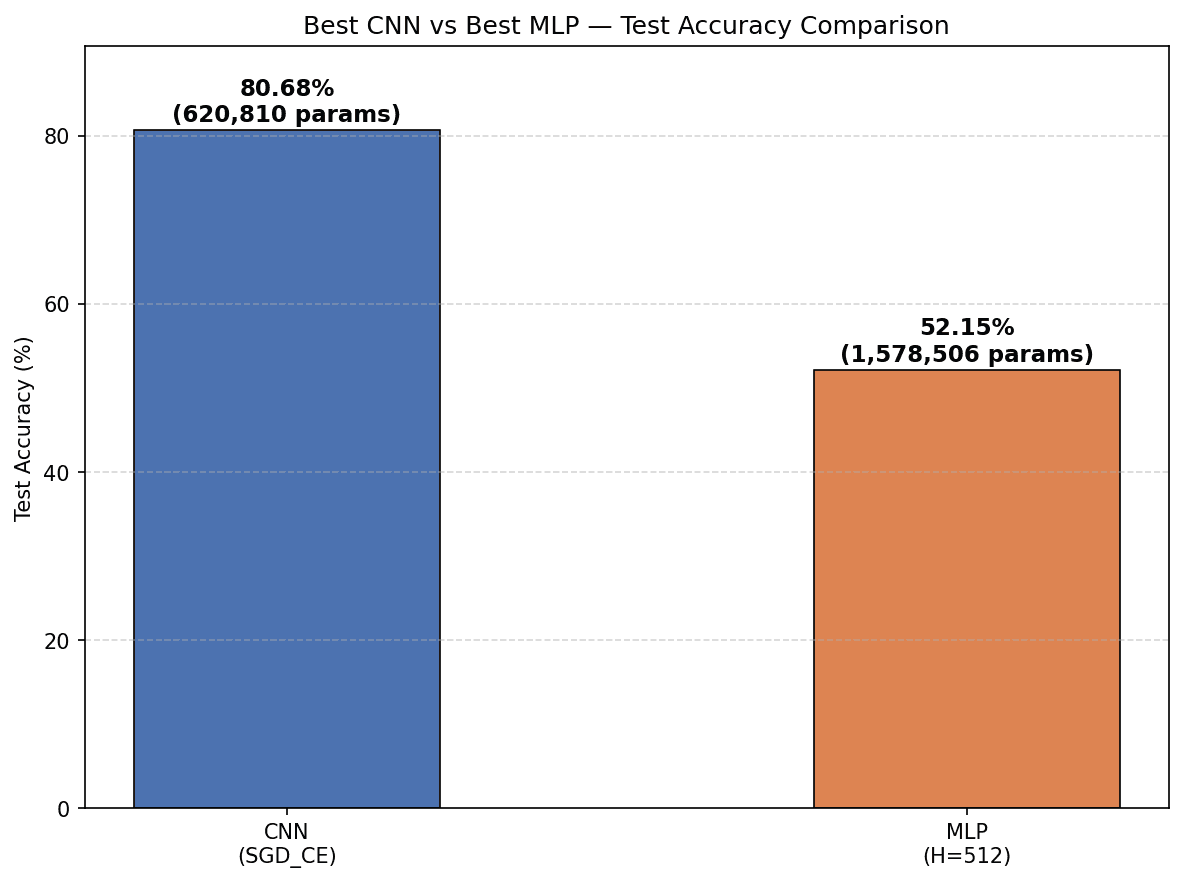
CNN versus MLP test accuracy on CIFAR-10.
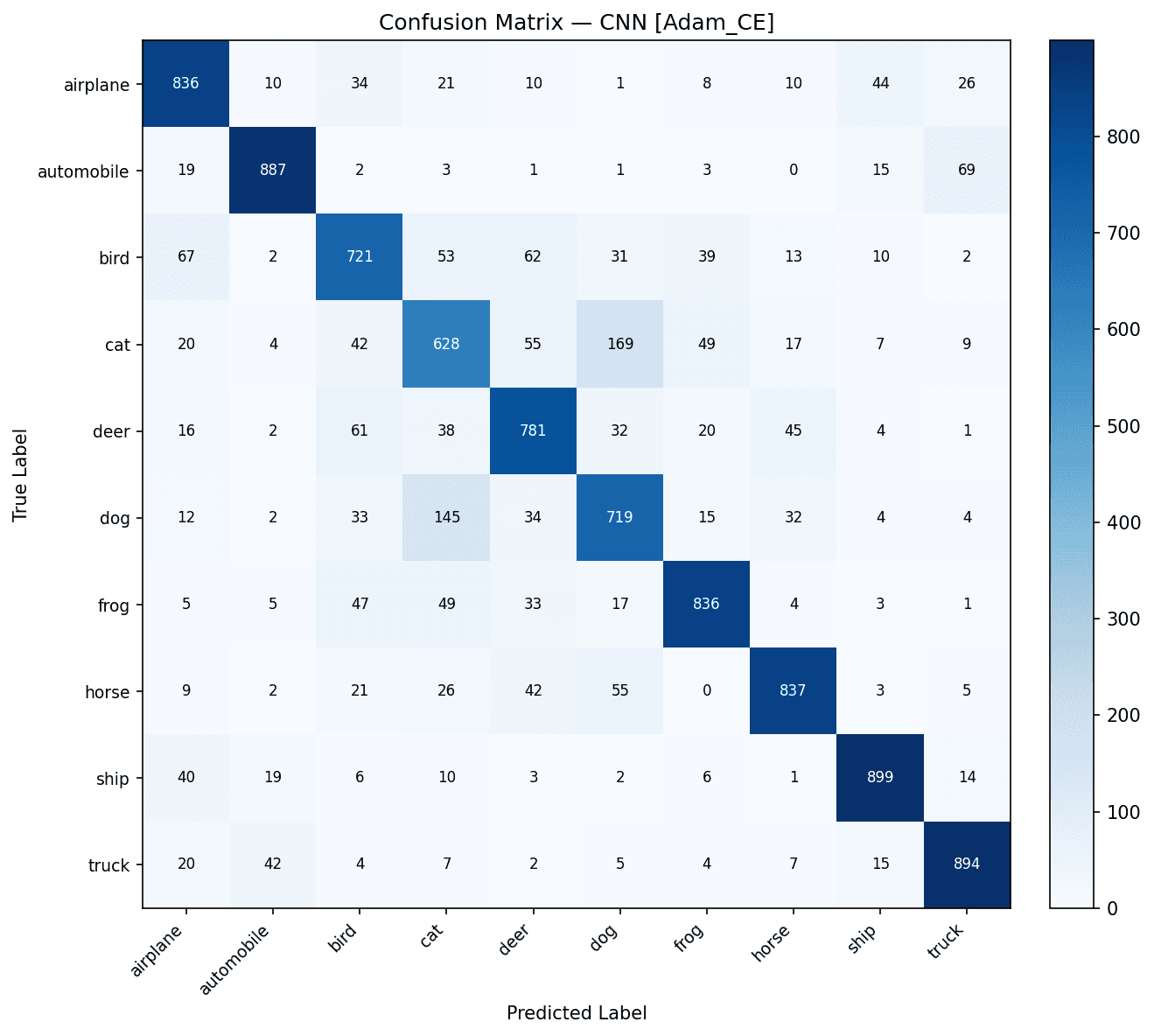
CIFAR-10 confusion matrix, CNN with Adam and cross-entropy.
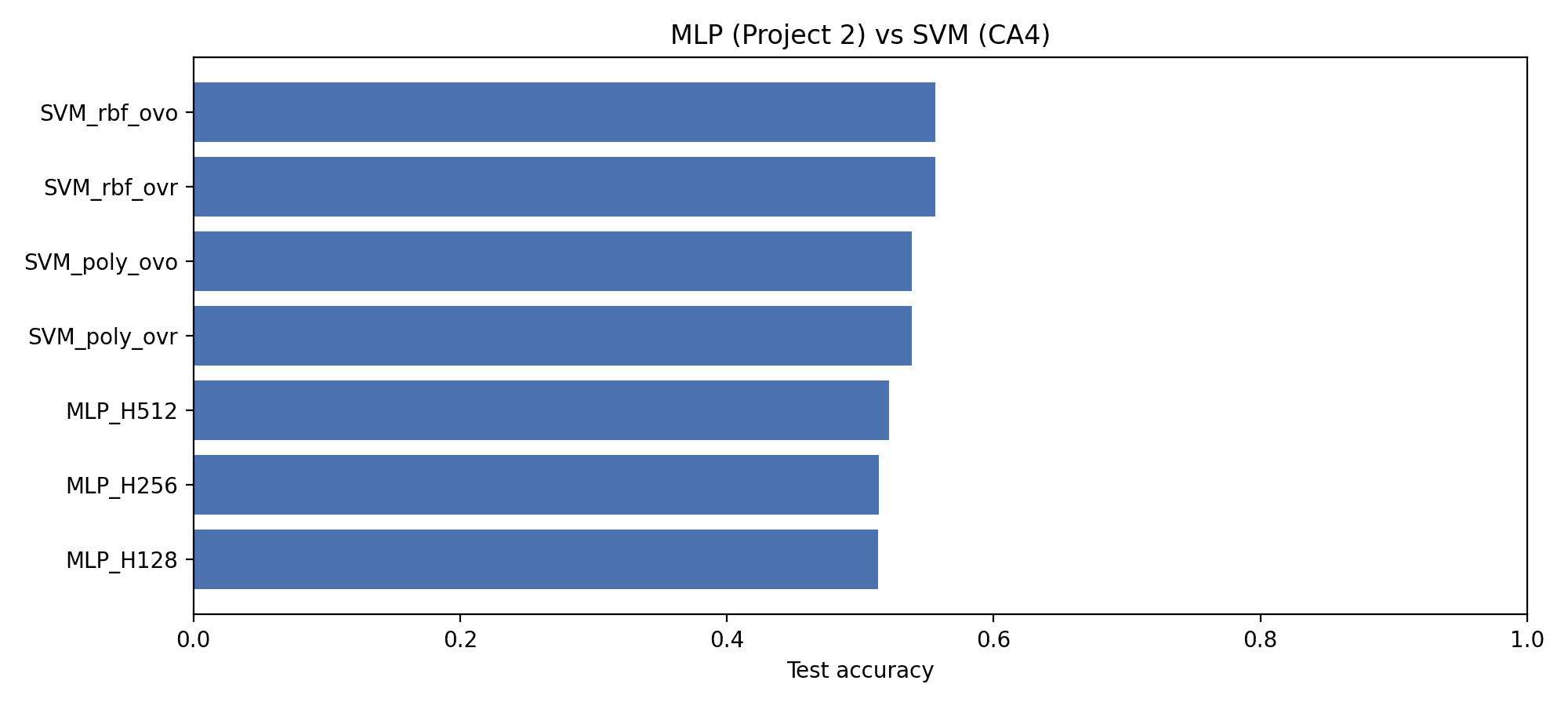
MLP versus kernel SVM test accuracy.
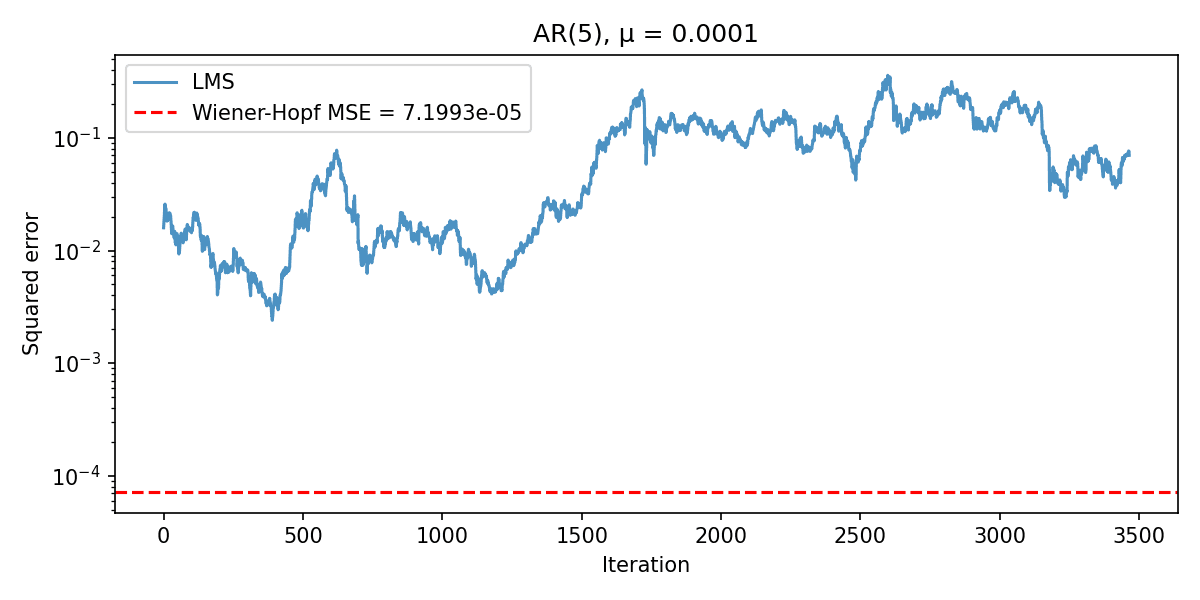
LMS versus Wiener-Hopf on an AR predictor.